Table of Contents
Football fever: Perisic pulls off the biggest upset in a partidos de bundesliga match to date.
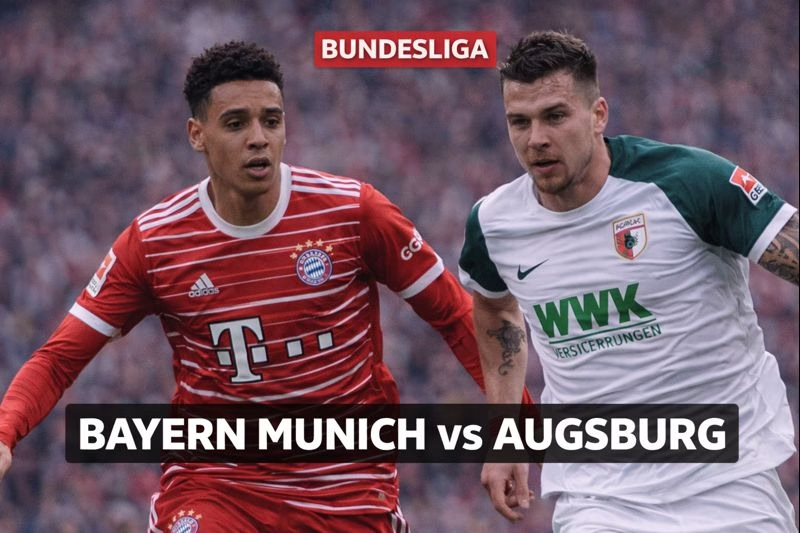
Augsburg, currently 13th in the Bundesliga standings, pulled off a stunning upset on Saturday night, defeating league leaders Bayern Munich 2-1. This victory is particularly significant as it marks Augsburg’s first win against Bayern Munich in 11 years. Furthermore, this was Bayern Munich’s first defeat of the season in the Bundesliga. The team has played a total of 19 matches, winning 16 and drawing 2. Despite this loss, Bayern Munich remains at the top of the Bundesliga table with 50 points.
The unbeaten run of 27 matches comes to an end.
Bayern Munich’s surprising defeat against Augsburg also brought an end to their 27-match unbeaten run in partidos de bundesliga. On the other hand, this was Augsburg’s first victory in any competition since the beginning of December last year.

Coming back from behind: They scored two goals in six minutes to win the match.
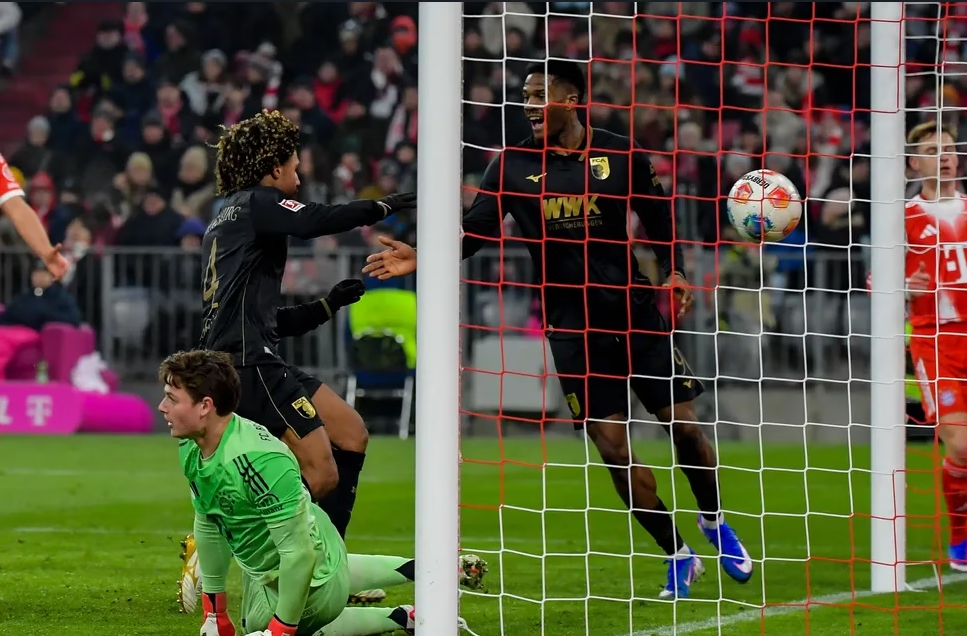
This victory is especially significant for Augsburg because they came back after falling behind by a goal. Bayern Munich had taken the lead with a goal scored by Hiroki Ito in the 23rd minute, but Augsburg made a strong comeback in the second half, scoring two goals in six minutes.
Heroes of the victory: Arthur Chaves scored the first goal for Augsburg in the 75th minute, leveling the score at 1-1. Then, in the 85th minute, Hen-Noah Massengo put Augsburg ahead 2-1. Although Bayern Munich tried hard to make a comeback, they were unsuccessful.
Why is it called Bundesliga?
It’s called the Bundesliga because “Bundesliga” literally means “Federal League” in German, reflecting its status as Germany’s unified, nationwide top-tier professional football competition, created in 1963 to bring together regional teams into one national system. The prefix “Bundes-” signifies it’s a national or federal body, similar to how “Bundesrepublik” means Federal Republic (Germany).
Key Points:
- “Bundes” = Federal/National: This part of the name points to its nationwide scope, uniting clubs from all over Germany.
- “Liga” = League: The German word for league.
- Unification: Before the Bundesliga, German football was fragmented into regional leagues (Oberligen), so the new league unified the best teams under one national banner.
- Establishment: The league officially started in the 1963-64 season, replacing the old system to professionalize German football and improve international competitiveness.
partidos de bundesliga stats
Players Goals
Harry Kane (Bayen) 21
Deniz Undav (VfB Stuttgart) 11
Michael Olise (Bayern) 10
Haris Tabaković (Haris Tabaković) 09
Luis Diaz (Bayen) 09
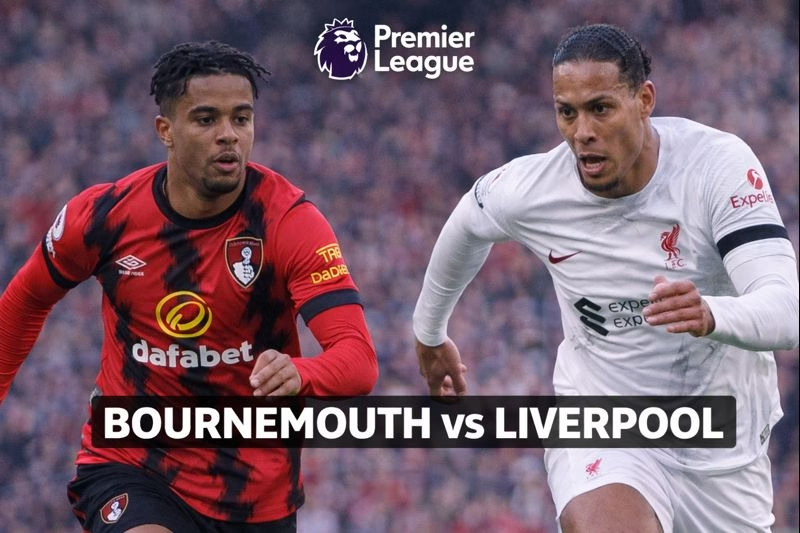
partidos de bundesliga Similar upsets also occur in the English Premier League.
In the English Premier League, Bournemouth defeated Liverpool 3-2 on Saturday night. This defeat ended Liverpool’s 13-match unbeaten run. This was only Bournemouth’s second win in their last 15 matches, and they are currently in 13th place in the table. Meanwhile, Liverpool has suffered their seventh defeat in 23 matches this season. The team is currently in fourth place, but there is a strong possibility that they will soon drop out of the top four.
Who is undefeated in Bundesliga season?
Bayer Leverkusen are now invincible this season in the German Bundesliga as they beat Augsburg 2-1 to end the league unbeaten. They played 34 league games and had 28 wins, 6 draws, 0 defeats for the season. They scored 89 goals scored and conceded 24 goals in 2023/2024 Bundesliga season
What is the 51 rule in Germany?
Germany’s “50+1 Rule” ensures that parent football clubs maintain majority voting control (50% plus one vote) over their professional teams, preventing external investors from gaining full control and safeguarding fan influence, affordable ticket prices, and traditional club culture, though exceptions exist for long-standing investors like Bayer Leverkusen and Wolfsburg. This rule, in place since 1999, requires the club’s members to retain the ultimate decision-making power, keeping clubs rooted in their communities.
How it Works
- Majority Control: The parent club, run by its members, must hold at least 50% plus one share of its professional football company.
- Voting Rights: This structure guarantees that club members always have the majority of voting rights, influencing key decisions.
- Investor Role: Outside investors can buy shares, but they cannot buy enough to control the club’s decisions.
Purpose
- Fan Power: Protects against hostile takeovers by ensuring fans remain the ultimate authority.
- Affordable Tickets: Helps keep ticket prices accessible, a core part of German football culture.
- Prevent Recklessness: Safeguards clubs from financially reckless owners who might prioritize profit over fan interests.
Exceptions
- Long-Term Investors: Clubs like Bayer Leverkusen (Bayer AG) and VfL Wolfsburg (Volkswagen) are exempt due to significant, long-term investment for over 20 years.
Debate
- While supported by many fans for preserving tradition, some figures in German football argue for abolishing the rule to attract more investment, but member sentiment generally favors its retention.